Understanding Traffic Laws
Advocate Umer Mir
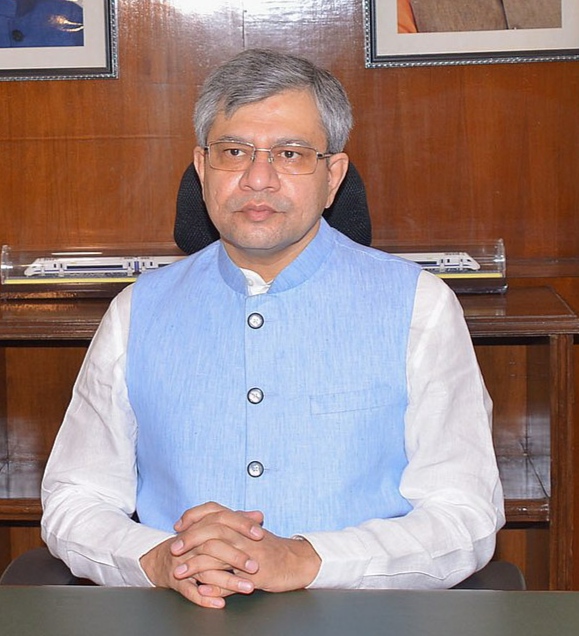
The laws governing motor vehicles and road traffic regulation in India are primarily contained in the Motor Vehicles Act, 1988. This comprehensive legislation aims to ensure the systematic regulation of road traffic, promote road safety, maintain public order on roads, and provide mechanisms for compensation in the event of accidents.
Over the years, the Act has undergone several amendments to address emerging transportation challenges, technological developments, and the growing volume of vehicles on Indian roads.
A fundamental requirement for driving any motor vehicle under Indian law is the possession of a valid driving license. No person may drive or operate a motor vehicle without holding a license issued by a competent authority following due process under the Act and the rules framed thereunder. Any individual found driving without a valid license is liable to imprisonment for up to three months or a fine of ₹5,000, or both.
The minimum age to obtain a driving license for a motor vehicle is 18 years. However, individuals who are 16 years or older may obtain a license to drive a motorcycle with an engine capacity not exceeding 50cc. The minimum age limit for driving a transport vehicle—such as buses, trucks, and taxis—is 20 years.
Before receiving a permanent driving license, an applicant must first obtain a learner’s license, which remains valid for six months from the date of issuance. Ordinarily, an applicant must hold a valid light motor vehicle license for at least one year before applying for certain categories of licenses.
The Licensing Authority wields the power to suspend, revoke, or cancel a driving license if the license holder is found guilty of contravening provisions of the Motor Vehicles Act or the rules made thereunder. Similarly, a judicial court may, through a written order, disqualify an individual from holding or obtaining a driving license if that person is convicted of an offence under the Act.
In addition, the Act places a similar requirement on those employed as conductors on stage carriages—motor vehicles used for carrying more than six passengers (excluding the driver) for hire at separate fares. No person may be employed as a conductor unless he possesses a valid conductor’s license. The legal provisions governing suspension, cancellation, and disqualification of conductor’s licenses correspond closely to those applicable to driving licenses.
Every motor vehicle must be registered before it can be lawfully driven in any public place. Driving or allowing any vehicle to be driven without registration is a punishable offence. Registration serves as proof of ownership and ensures that all vehicles meet the safety and environmental standards prescribed by law.
Furthermore, no motor vehicle may be used as a transport vehicle unless a valid permit has been issued by the competent Transport Authority. These permits are classified into several types, including:
Stage carriage permit – for vehicles carrying passengers for hire at separate fares on fixed routes or stages.
Goods carriage permit – for vehicles engaged in the transport of goods.
Contract carriage permit – for vehicles hired for specific journeys under contract.
Private service vehicle permit – for vehicles used by institutions or organizations for employee transport.
All permits are subject to specific conditions, validity periods, and renewal requirements. They may also be suspended, revoked, or cancelled for violations of the Act or any conditions attached to the permit.
The Act mandates strict compliance with traffic signals, rules, and signage. Drivers must observe prescribed speed limits, follow lane discipline, and refrain from leaving their vehicles in positions that may endanger other road users. If a vehicle is found abandoned or left unattended for more than ten hours in a place not designated for parking, the local police having jurisdiction may remove or tow away the vehicle.
For two-wheelers, carrying more than one pillion rider is prohibited. Both the rider and pillion must wear appropriate protective headgear. Notably, all persons above the age of four years riding on a two-wheeler must wear a helmet, as this is an essential safety measure aimed at reducing head injuries in accidents.
Drivers are legally bound to produce their driving license when demanded by an authorized police officer in uniform. In cases where the license has been seized, the holder may present the official receipt issued upon seizure, which serves as a valid substitute document.
Similarly, the driver or owner of a motor vehicle, particularly a transport vehicle, must produce the insurance certificate, vehicle fitness certificate, and permit whenever required by the police or transport authorities. If these documents are not immediately available, they may be produced within fifteen days of such demand.
A driver must also stop the vehicle when ordered to do so by a police officer not below the rank of Sub-Inspector -who is in uniform. This obligation becomes especially important when the vehicle is involved in an accident causing injury, death, or damage to property.
Traffic laws serve as the backbone of an orderly and safe road transport system. Compliance with the provisions of the Motor Vehicles Act, 1988, is not only a legal duty but also a civic responsibility that protects lives, property, and public infrastructure.
Every driver, conductor, and vehicle owner must understand their rights, duties, and liabilities under the law. An aware citizenry and a responsible driving culture are essential to reducing accidents, ensuring road discipline, and building a safer and more efficient transport network in India.
Mir Umar, hailing from Kupwara, is a practising advocate in the High Court of Jammu and Kashmir and Ladakh, Srinagar, and all subordinate courts of J&K.