A Year Without a Father
A Year Without a Father:
The Weight of Absence and the Truth Behind Sympathy
REHANA JAMAL
The Weight of Absence and the Truth Behind Sympath
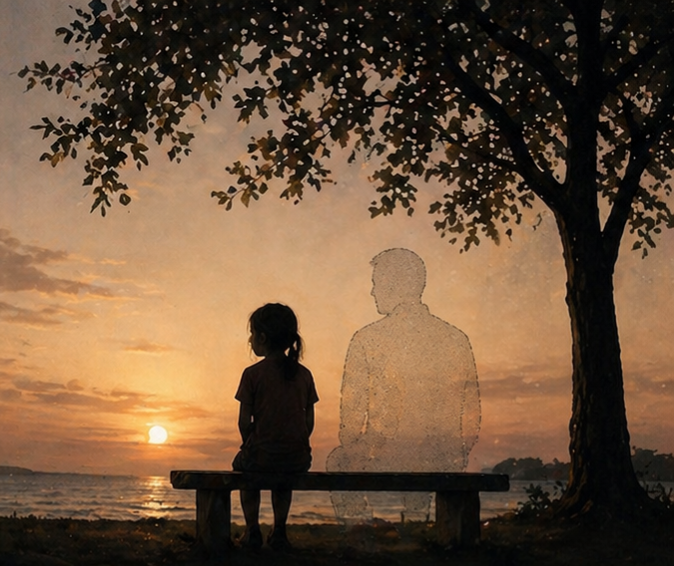
It has been a year since I lost my father. People often say that time heals everything but what they don’t tell you is how time also reveals things, especially the reality of people around you.
Losing a father is painful on its own but what made it even harder for me was not just the loss, it was how people reacted to it.
In the beginning, many people came to “support” us. At least, that’s what it looked like on the surface. They would sit with us, speak softly and offer condolences. But behind those words, I often felt something else. Something that didn’t feel like genuine care. It felt like performance.
Like they were there because they were expected to be not because they truly understood or cared.
Some people would repeatedly say things like, “Oh, poor girl, she doesn’t have a father anymore.” They said it right in front of me, again and again as if I needed constant reminding of what I had just lost.
That didn’t feel like support, it felt like they were labeling me, reducing me to someone to be pitied. I don’t like being seen that way. I don’t want that kind of attention.
What hurts even more is how people start treating you differently.
As if losing a father suddenly changes who you are or how you should live. I’ve been told to behave differently now, to be more “careful,” to think about “what people will say.” Even something as simple as going out becomes an issue.
If I step outside too often, I’m reminded: “Don’t go out so much… what will people think? Your father is no more.”
Another painful realization came during those first few days after his death. That’s when I truly saw people’s faces,their real ones. Some came and cried loudly, almost dramatically, as if they were trying to prove their grief. It didn’t feel real. It felt forced, like a formality they had to complete.
Others sat around talking about random things, gossiping as if nothing had happened. Some even complained about the food being served in the house of mourning. Imagine that, finding faults in food while a family is grieving.
Those moments stayed with me. They changed how I see people.
And then there is another truth I carry quietly, one that hurts in a different way. My grief is not always just about losing my father. Sometimes, it feels heavier when I see others with theirs. When I watch someone laugh with their father, sit beside him or simply share a moment, something inside me aches.
It makes me think, what if I had done those things too?
What hurts me the most are the “what ifs.”
What if I had hugged him once?
What if I had sat with him and spent time, just talking?
What if I had tried to understand his anger instead of staying distant?
What if I had given him a reason to smile?
The pain is not just in his absence, it is in the memories that were never made.
I remember small things now. Times when the whole family would go out and he would stay back at home. Someone had to stay but why was it always him? I never questioned it then. I never thought it would matter this much later.
I never really sat with him and joked around. I don’t even have a single picture with him. And now, these small things have become the biggest sources of pain. It’s strange how the smallest missed moments turn into the deepest regrets.
Since then, I’ve become more sensitive. Even small things hurt more than they used to. A slight change in someone’s tone, a small act of disrespect, it affects me deeply. Maybe it’s because I’ve already gone through something so heavy that now everything else feels sharper.
But the hardest part of this journey has not just been missing my father, it has been dealing with the way society responds to loss. The fake sympathy, the constant reminders, the unnecessary restrictions and the way people think they have the right to define how I should live now.
I am not “bechari.” I am not someone who needs to be constantly pitied. I am someone who lost a father and that is already enough to carry.
This past year has taught me that grief is personal, but society often tries to make it public. It has taught me that not all support is real and not all silence is empty.
And most importantly, it has taught me to see through people, to understand who truly stands with you and who is just playing a role.
A year without my father has been painful. But it has also opened my eyes in ways I never expected.
And if there is one thing I know now, it is this: losing someone doesn’t make you weak, but pretending to care when you don’t is far worse than saying nothing at all.