Empowering Students: Understanding the Paradigm Shift in Teaching and Learning
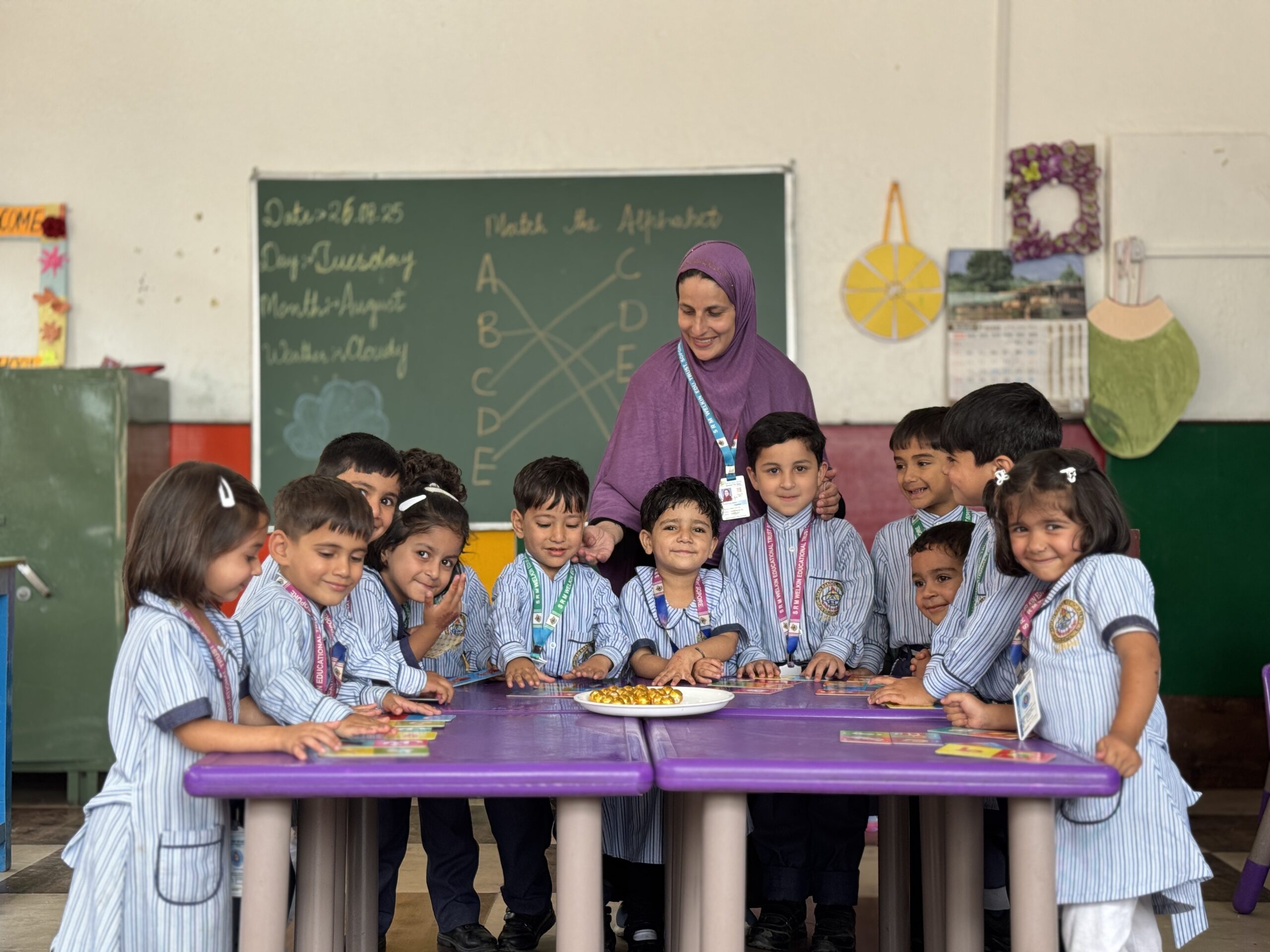
Dr Manzoor Ahmed Rather
Associate Professor
Department of Education
University of Kashmir (Hazratbal Srinagar)
Email: manzoorahmadrather004@gmail.com
“The illiterate of the 21st century will not be those who cannot read and write, but those who cannot learn, unlearn, and relearn.”
(Alvin Toffler)
A paradigm shift in teaching and learning refers to a fundamental change in the way education is approached. It refers to moving away from traditional, teacher-centered methods towards a more student-centered, active learning environment. It is about creating a more dynamic, engaging, and relevant learning experience for students, preparing them for the challenges and opportunities of the 21st century. Put differently, it involves embracing new technologies, focusing on developing relevant 21st-century skills, and tailoring education to meet the diverse needs of learners. It involves active participation, critical thinking, collaboration, and real-world application of knowledge, with the ultimate aim of fostering lifelong learning and holistic development rather than mere content memorization.
Traditional paradigms that focus on factual knowledge, academic achievement, and teacher-centered learning are now found insufficient and irrelevant to prepare the younger generation for a changing world of the 21st century. Thus, the paradigm shift has focused on a new role for teachers as facilitators who motivate learners and provide support according to their needs. According to the new paradigm, knowledge is actively constructed, discovered, transformed, and extended by students. The teacher’s role is to develop students’ competencies and talents. The modern paradigm emphasizes the 21st-century skills needed for students to succeed in today’s digitally interconnected world. These skills include critical thinking, creativity, collaboration, communication, and problem-solving.
In traditional classrooms, knowledge was considered the accumulation of facts, laws, and theories. The role of a teacher was simply to transmit authoritarian knowledge to students, who would act as passive receivers. The main focus of the teaching-learning process was on memorization of facts, formulae, definitions, equations, derivatives, procedures, and theories. Teaching was examination-oriented, and grades/marks in the final examination were considered indicators of pupils’ achievement and learning capabilities. In most classrooms, the mode of curriculum transaction did not cater to the development of different abilities and skills. The most prevalent style of teaching was transmissive or expository, which placed a premium on memorization rather than independent thinking. Students developed traits like passive submission, conformity, and subordination — traits no longer needed in this century.
Paulo Freire, the author of the landmark text Pedagogy of the Oppressed, criticized this traditional approach, which views learners as empty, inferior, passive recipients of a teacher’s knowledge, and called it the banking model of education. He argued that this approach discourages critical thinking and dehumanizes both the learner and the teacher.
UNESCO’s Education for Sustainable Development Report (2015) on outdated teaching models highlights:
“Traditional curricula often emphasize rote learning and memorization at the expense of creativity, problem solving, and critical thinking skills needed in the 21st century.”
Educational policies from time to time have played a crucial role in shaping the direction of teaching and learning. The NEP 1986 clearly mentioned that a learner-centered approach should be emphasized, which will help the learner to get a pivotal place and position in the process of teaching and learning. ‘Interactive teaching,’ based on teacher–student dialogue, is recommended, and the teacher has to provide opportunities for pupils to discover themselves. The use of teaching-learning strategies viz. observation, collection of materials and information, demonstration and experimentation, project assignment, play-way activities, educational games, educational excursions, role play and dramatization, group discussion and group activities, inductive–deductive teaching, problem solving, and discovery learning will go a long way in making curriculum transaction child-centered. The focus will be on identifying and nurturing the latent faculties, abilities, and talents of the child.
The NEP 1986 recognized:
“A human being is a positive asset and a precious national resource which needs to be cherished, nurtured and developed with tenderness and care coupled with dynamism.”
In the present scenario, teaching does not refer to a rigid and stereotyped process of transmitting facts and figures. The child is taught according to his latent abilities and helped to grow and learn. The teacher is not an instructor or taskmaster, but a helper and guide who supports the student’s growth and learning. His real business is to suggest, not impose. He does not actually train the pupils’ minds; he shows them how to perfect their instrument of knowledge and guides them in the process.
The International Commission on Education for the 21st Century, commonly known as the Delors Report (1989), appointed by UNESCO and officially titled Learning: The Treasure Within, advocated for a shift from a traditional teaching-centered approach to a learning-centered one. It emphasized lifelong learning and the development of four key pillars of learning:
Learning to know
Learning to do
Learning to live together
Learning to be
The report shifted the focus from simply transmitting knowledge to fostering a learner’s ability to acquire, construct, and apply knowledge. It championed a humanistic approach to education, emphasizing preparation for living together as social beings equipped with knowledge and competence, with the ultimate aim of leading the individual towards self-actualization.
The report emphatically remarked:“Teachers must adapt their relationship with learners, switching roles from ‘soloist’ to accompanist, and shifting the emphasis from dispensing information to helping learners seek, organize and manage knowledge, guiding them rather than moulding them.”
The National Curriculum Framework (2005) recommended a paradigm shift from “transmission of knowledge by the teacher” to “construction of knowledge by the learner.” It represents a significant shift by moving away from rote learning and teacher-centered approaches towards learner-centered, activity-based, and holistic approaches. It emphasizes connecting knowledge to real-life experiences, promoting critical thinking among students, and fostering a positive learning environment.
The key aspects of NCF 2005 include:
Shift from rote learning to conceptual understanding
Learner-centric pedagogy
Holistic development
Reduced curriculum load
Assessment reforms
Embracing inclusivity and diversity
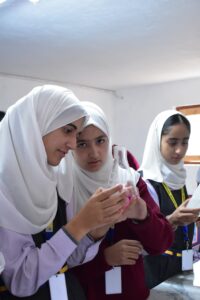
NCF 2005 highlights the importance of constructivist pedagogy as the core approach to curriculum transaction. According to this approach, children should be encouraged to explore their world, discover knowledge, reflect, and think critically. Constructivist teaching and learning view knowledge as a process, consider how students learn, emphasize learning (not teaching), and encourage learner initiative and autonomy. It encourages inquiry learning, considers the learner’s mental model, and involves students in real-world situations. This approach holds that the learner constructs knowledge using prior experiences and new information. This process involves reorganizing existing cognitive maps; hence, the emphasis is on developing thinking skills.
The NCF 2005 emphasizes teaching for the construction of knowledge through appropriate learning tasks. It focuses on the role of a teacher as:
Facilitator of learning
Promoter of inquiry-based learning
Fostering critical thinking
Encouraging learner autonomy
Using a constructivist approach
Shifting from rote learning to conceptual understanding
Using continuous and comprehensive evaluation
Understanding children within social, cultural, and political contexts
Being receptive and constantly learning
Viewing learning as a search for meaning out of personal experience
Effective teachers constantly look for effective instructional practices and strategies and create appropriate teaching–learning situations. Supporting the constructivist approach, Jean Piaget, the famous cognitive psychologist, recommended that children learn best when they are active, construct knowledge, and seek solutions themselves. For him, children learn best by making discoveries, reflecting on them, and discussing them, rather than blindly imitating the teacher or memorizing by rote.
To empower students, effective teachers help them participate, perform, create, practice, design, and produce. The best leadership style of a teacher is one where the teacher disperses power among students — teaching them to help themselves, take responsibility, and become self-regulating. Students in a constructivist classroom ask questions, formulate and test hypotheses, draw their own conclusions, and compare their results with those of others. The teacher accepts students’ autonomy and initiatives, uses interactive materials, asks open-ended questions, tailors teaching strategies to students’ responses, and encourages students to analyze, interpret, and predict.
The National Education Policy (2020) aims at overhauling India’s education system and marks a significant paradigm shift, emphasizing the importance of a student-centric approach. It proposes a pedagogical shift from rote learning to conceptual understanding and aims to prepare the country’s youth for the challenges and opportunities of the 21st century.
According to the policy document:
“Pedagogy must evolve to make education more experiential, holistic, integrated, inquiry-driven, learner-centered, discussion-based, flexible and of course, enjoyable.”
This document highlights holistic development to foster cognitive, socio-emotional, and physical skills. It strongly recommends a multidisciplinary approach that encourages students to explore subjects and develop well-rounded skill sets such as critical thinking, creativity, scientific temper, communication, collaboration, multilingualism, problem solving, ethics, social responsibility, and digital literacy.
The NEP 2020 advocates integrating arts, commerce, and science, aiming to cultivate critical thinking and problem-solving skills among students. It stresses that to develop holistic individuals, soft skills such as empathy, collaboration, and values must be incorporated at each stage of learning, from pre-school to higher education. The policy emphasizes equipping students with 21st-century skills and increasing their employability potential. Students must focus on learning how to think critically and solve problems, how to be creative, and how to innovate, adapt, and absorb new material in novel and changing fields.
In order to develop all aspects and capabilities of learners, the curriculum must include basic arts, crafts, humanities, games, sports and fitness, languages, literature, culture, and values, in addition to science and mathematics.
Hence, the pedagogical reforms proposed in the NEP 2020 for school education include making education more experiential, holistic, inquiry-driven, and learner-centered. The policy stresses that at all stages, experiential learning will be adopted, including hands-on learning, arts-integrated and sports-integrated education, and storytelling-based pedagogy.
The landmark policy (2020) represents a paradigm shift in the Indian education system, aiming to transform the way knowledge is imparted, promote holistic development, and equip learners with the skills required to adapt to a fast-changing world.
The main features of the shift include:
Holistic development of students
Multidisciplinary approach to education
Flexibility and choice in selecting subjects
Technology integration in education
Teacher empowerment
Assessment reforms
Inclusivity and equity
Use of innovative pedagogies (e.g., flipped classroom, art-integrated learning, project-based learning)
Critical pedagogical approaches to encourage critical thinking and problem-posing attitudes
Conclusion:
The paradigm shift requires teachers to improve their pedagogies, make them more interactive and student-centric, and make classrooms inclusive spaces not just for reading but for learning. Skills such as dynamic learning, problem solving, critical thinking, logical development, and analytical learning through practical circumstances should be prioritized in the curriculum. Students should be encouraged to apply textbook knowledge to real-life situations. In today’s world of challenges, there is a dire need to adapt education and teaching methods to enhance the learning experience for Millennial and Generation Z students.
Since an abundance of information is already available, the teacher has to play the dynamic role of a facilitator. Educators must adopt and promote effective teaching practices to enable students to acquire the needed values and skills. Our priority must be to bring fun, action, and activities into our methodology. If glorification of good teachers and the romanticization of education is needed, it can be achieved by holding classes on art, poetry, painting, storytelling, educational videos, crafts, theatre, etc.