Fuel Rush in Kashmir: Panic, Rumours, and the Need for Responsibility
Adnan Nazir
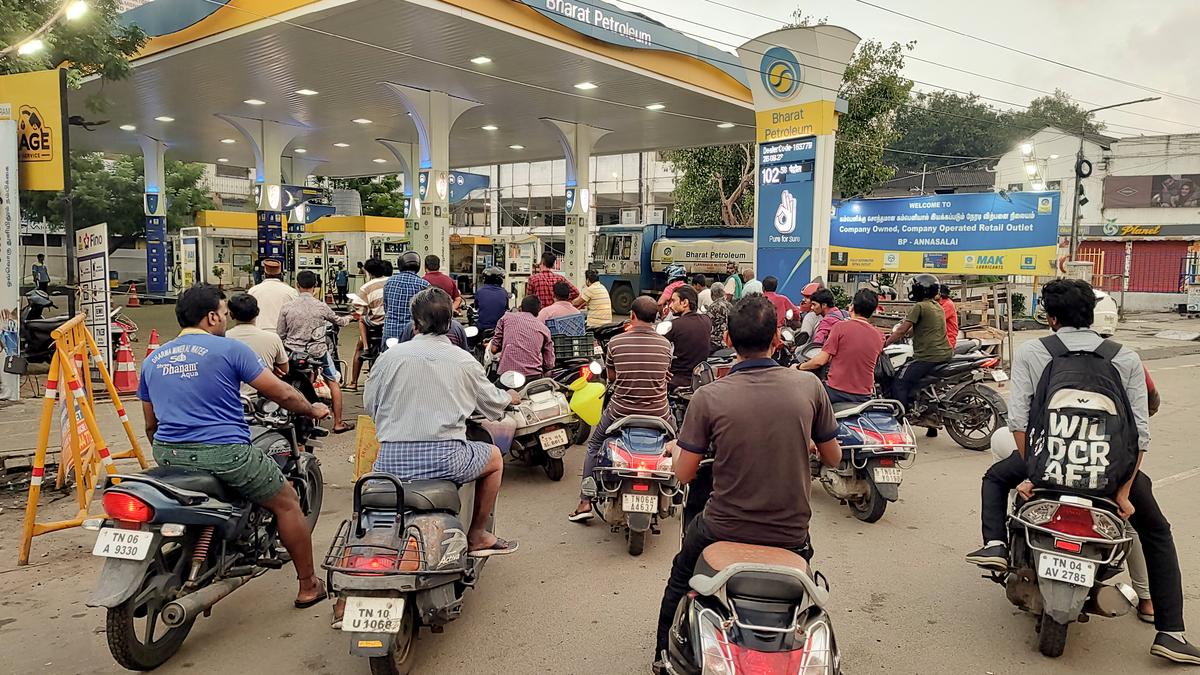
In the last few days, Kashmir has witnessed a scene that many of us have seen before, yet failed to learn from. Long queues outside petrol pumps, people waiting. for hours, arguments breaking out, and a general sense of anxiety in the air.
From Srinagar to other parts of the Valley, fuel stations have been overcrowded not
because fuel has run out, but because people fear it might.
This situation is not new. Every time there is some uncertainty be it political tension,weather disruption, or international developments panic buying begins.
The current rush for fuel appears to be driven more by rumours than by any real shortage.
Authorities have already clarified that there is no scarcity of fuel, yet the public
response tells a different story.
What we are witnessing is a classic case of panic psychology. When a few people
start rushing to petrol pumps, others follow without questioning.
It becomes less about need and more about fear of missing out. Even those who have enough fuel in
their tanks feel compelled to refill, “just in case.” And in doing so, they unknowingly
become part of the problem.
The irony is simple: the shortage, people fear is actually created by their own
actions. Petrol pumps are designed to handle regular demand, not sudden surges.
When hundreds of vehicles line up at once, supply gets strained temporarily.
This creates the illusion of scarcity, which then fuels even more panic. It’s a cycle that feeds itself.
A major factor behind this chaos is the unchecked spread of rumours, especially on
social media. A single forwarded message claiming that fuel supplies may stop is
enough to trigger anxiety across thousands of people.
In today’s fast-paced digital
world, information spreads quickly but not always accurately. Unfortunately, many
people do not stop to verify what they read before reacting to it.
This points to a deeper issue: lack of media literacy.
People are consuming
information, but not questioning it. They are reacting instantly instead of thinking
critically. In a place like Kashmir, where situations can change quickly, the ability to
distinguish between fact and rumour becomes even more important.
But the issue is not just about misinformation it is also about responsibility.
In times
like these, society is tested not by the situation itself, but by how people respond to
it.
Sadly, what we are seeing is a growing tendency to think individually rather than
collectively.
People are buying more fuel than they actually need, without
considering how it might affect others.
The consequences are real. Those who depend on fuel for their daily livelihood taxi
drivers, auto operators, delivery workers are the worst affected.
For them, long
queues mean lost income. Emergency services, too, can face delays if roads remain
blocked and petrol pumps overcrowded. What begins as precaution for some turns
into hardship for others.
Daily life also suffers.
Students get late, offices are disrupted, and traffic congestion
increases.
The overall atmosphere becomes tense and stressful.
All of this, when in
reality, there is no confirmed crisis.
There is also a larger concern here. Repeated panic behaviour can weaken trust in
the system.
If people stop believing official statements and rely more on rumours, it
creates a dangerous environment were misinformation controls public behaviour.
This is not just about fuel it reflects how society reacts to uncertainty.
At the same time, the role of the media becomes crucial.
Responsible journalism
can calm fears by presenting verified facts clearly and consistently. Sensationalism,
on the other hand, can make things worse. Media outlets must understand their
responsibility in such situations not just to report, but to guide.
Social media users also need to act responsibly. Not every message needs to be
forwarded. Not every claim needs to be believed.
A moment of verification can
prevent hours of chaos. In today’s world, every individual is also a communicator,
and that comes with responsibility.
The authorities, for their part, have assured that fuel supply remains stable. They
are monitoring the situation and working to maintain normal distribution. But their
efforts alone are not enough. Public cooperation is equally important.
Fear is natural, especially in uncertain times.
But allowing fear to dictate our actions
often leads to unnecessary problems. Instead of reacting impulsively, people need
to pause, think, and act sensibly. Buying only what is needed is not just practical it
is responsible.
There is also a need to revive the idea of community. In moments of uncertainty,
society should come together, not compete in panic. Hoarding fuel may feel like
self-protection, but it comes at the cost of someone else’s need.
A balanced and
considerate approach benefits everyone.
Simple steps can make a big difference. Avoid unnecessary travel, use fuel wisely,
and rely on official sources for information. Community leaders, educators, and
responsible citizens can play an important role in spreading awareness and calming
fears.
In the end, the current fuel rush in Kashmir is not a result of an actual shortage, but
a reflection of how quickly fear can spread in today’s connected world. It is a
reminder that public behaviour plays a crucial role in shaping situations.
The way forward is clear stay calm, verify information, and act responsibly.
If people resist the urge to panic and instead choose patience, such situations can be
controlled before they spiral out of hand.
Kashmir has handled far more difficult challenges with strength and dignity.
This,too, can be managed provided people choose awareness over rumours, and responsibility over panic.
Author is a Communication and PR Specialist and Social Media Strategist
based in Jammu and Kashmir