Amin Kamil: The Unconventional Voice Who Shaped Modern Kashmiri Literature

A tribute to the poet, thinker, and reformer whose fearless
originality transformed the contours of Kashmiri verse and
thought.
By: Showkat shafi
Emerson’s famous words, ‘whosoever is a great man is a non –conformist’, fit so
well with Amin Kamil, the prolific poet , fiction writer ,literary critic ,researcher
and Editor. 11 years ago, this major voice in Kashmir poetry and one of the chief
exponents of modern Ghazal, whose contemporaries and later generations widely
accepted his influence, passed away at the age of 90.
Being a public servant at University one comes across a cross-section of
intellectuals, writers, and academics whom you love to hear. I have heard Kamil at
numerous literary events held at Kashmir University. One could not miss his
genius and originality of thought over issues of contemporary relevance.
Sometimes people could disagree with him at the most, but never afford to ignore
him or be indifferent to his utterances.
Background
“A thought-provoking intellectual who would challenge all the forms and styles in
prose and poetry, and focused himself on Kashmir specific research”, is how Faruq
Masudi, a writer, and filmmaker, describes his ‘unconventional’ way of ‘doing’.
The road he treads on the landscape of Kashmiri language and literature was the
one less traveled, Faruq said. And that for great literary genius Robert Frost
“makes the difference”.
Born in Kapran Kulgam, a village in south Kashmir, on 3rd August 1924, Kamil
moved to Srinagar at a very young age; graduated in Arts from the Punjab
University and later took a degree in law from the AMU, Aligarh. In 1947, he
joined the Bar and practiced law until Sri Pratap College, Srinagar appointed him
as a lecturer in 1949. Amin Kamil remained closely associated with the writers’
movement of that era and under its influence switched over from Urdu to Kashmiri
as his medium of expression.
In 1958, the State Cultural Academy, when established, enlisted him as a member,
and he assumed the role of the convener for Kashmiri. Kamil later became Editor
for the Kashmiri section and edited the two journals of the Academy for many
years.His notable works include Gati Manz Gaash (1958), Kathi Manz Kath
(1966), Lava ta Prava (1965), Beyi Suy Paan (1967), Padis Pod Tshay (1972), Yim
Myani Sokhan (2001
Down the memory lane:
Recalling Kamil’s days as editor Sheeraza, the poet critic and translator of
Kashmir languages Muneeb-ur-Rehman, one of his old blogs describes Kamil as
“an editor par excellence”. “Kamil would value and respond to all forms of
literature – new and old with equal interest and treatment. His unprejudiced
outlook on all genres and styles culminated in the popularity of Shiraza among a
cross-section of Kashmiri writers, recalls Muneeb. Kamil was instrumental in
fashioning Kashmiri Ghazal into an entity distinct from its Urdu and Persian
counterparts.
Freshness of sensibility, maturity of expression, and striking technical innovation
collectively characterize his poetry, granting him a uniquely distinctive diction.
Ninder chi tosi katan wajnaen paemitch kar taam
Yinder chu toti nachaan intizaar paghuk kar
Amin Kamil
Wheel spinners have long slept
But the wheel will continue to move on,
Wait for tomorrow.
Translation: Showkat Shafi
Kamil employs subtle humor and satire with devastating effect in his poetry.
Through it, he mirrors contemporary life and makes a social comment on his
milieu. His satire or humor, however, does not bruise but heals.
“Yeti chu soroei fiza Karamaech hund ,
Yeti cAmin hi prath mehkamus chalawaan laash
Kamil
With us miracles are quite common,
everywhere the dead rule the living
Translated by Unknown
He has the quality of being simple as well as profound at the same time. This he
does in purely Kashmiri tenor. Despite his great academic knowledge, he has never
fallen prey to the transplantation of an alien metaphor, borrowing of a foreign
concept or trend in literature. His use of language is exceptional in the literary
history of Kashmir. Kamil’s contribution to the field of fiction adds to his stature.
In 1958, Gati Manz Gaash (Light Amidst Darkness), a novel written in the context
of the aftermath of the partition of the Indian sub-continent in 1947, won him
acclaim.
Kamil’s collection of short stories, Kathi Manz Kath (Story Within Story)
published in the mid-60s includes his masterpiece, Kokar Jang (The Cockfight).
The Cockfight is considered the most popular story in Kashmiri literature. It has
been translated into many Indian languages and has appeared in anthologies such
as Indian Short Stories Contemporary, Kashmiri Short Stories, and Contemporary
Indian Short Stories.
It has also appeared in Best Loved Indian Stories of the
Century, published by Penguin India in 1999. Kamil like many great writers the
world over believed humor and satire as “effective weapons for social
change”. His wonderful compilation Asan Trayi is a great example of satire and
humor. Kamil also established himself as a creative prose writer and critic.
His
great contribution is the publication of Kashmiri Sufi Poetry (3 volumes ) and
revisiting the traditional Habakatoon and presenting a fresh and “vivid” picture of
this great historical character.
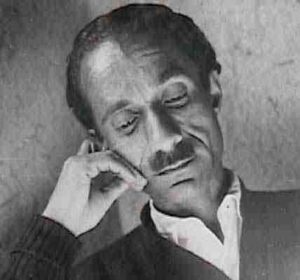
Amin Kamil as editor
Apart from some anthologies he edited, Kamil has published two books of literary
criticism Jawaban Chu Arz (In Reply, vol 1 & 2) and a book Mehjoornen Bonen
Tal (Under the Chinars of Mehjoor) on the popular Kashmiri poet of the 1930s,
Ghulam Ahmad Mehjoor.” Among a handful of employed and freelance editors
that we had in the past 60 years or so, Amin Kamil stands out.
One of the first and
foremost editors, and an editor by both profession and passion, Kamil not only
edited and published the very first collection of Kashmiri writings Yavan Nahaj in
1954 with Aziz Haroon but was also associated with two reputed early magazines
Gulrez and Kongposh, and later on found an independent magazine Neab even as
he was editing Sheeraza at his job in the Cultural Academy ” Writes Muneebul
Rehman , Editor Naeb Magazine
The Jammu & Kashmir Academy of Art, Culture and Languages was established
in 1958 by a government committee on which Amin Kamil served as a convenor.
Among the members were Jialal Koul, Nandlal Kaul Talib, Brij Krishan Madan,
Amin Kamil and G. R. Santosh. “So began Kamil his 15 year long career as an
editor at this institution; though adversely affected in some ways but completely
unmoved by the politics, promise and temptations of its admistrative positions.”
Adds Muneebul Rehman During his tenure as an editor, he made Sheeraza and
Son Adab true representatives of Kashmiri writing. Versatility being one of his
distinctions among his contemporaries, Kamil had an edge over all other editors
before and after him.
- He could value and respond to all the forms of literarture,
new and old, with equal interest and treatment. His unprejudicial outlook on all
genres and styles culminated in popularity of Sheeraza among a cross-section of
Kashmiri writers. The strong presence of Sheeraza and Son Adab did not leave
much room for the emergence of any other magazine until Kamil himself boldly
and independently brought out Neab which then opened the ground for other
competitive and subsequent magazines, Opines Muneebul Rehman .
Kamil edited nearly 100 issues of Sheeraza and more than a dozen issues of Son
Adab. Here are some of the special issues of these magazines.
A great lover of the Kashmiri language Kamil’s dictum, ”Kashri saeten Kashir
sairi” ( Kashmiris are because of the Kashmiri language) remained close to his
heart all his life. ‘Can we just be ourselves, pledge not to copy whether in thought
or diction and reap the benefits of this rich language’, he was often quoted as
saying.
Naerow, Manzil Chi warah door paek,
Yemi chi sayri kochi bay gul nor paek
Amin Kamil
let us move, the goal is yet too far,
All these lanes are devoid of flowers, move on
Translated by Unknown
A Two-day national seminar at Aligarh Muslim University Aligarh held in early
2009 on “Critical Perspective on Kashmiri Poet Amin Kamil” looked at the genius
of Kamil from many angles. In the seminar, Professor Gulshan Majeed, a noted
writer, and critic revealed that Kamil’s use of words is oriented toward liberating
us from the prison-house of systems, ideologies, and meta-narratives.
Prof Majeed added that “Kamil employs metaphors and paradoxes intending to transcend the
normal parameters of the communicability”
What others say about Amin Kamil
Besides his recognition at the national level, Kamil had little share as yet at the
international level. Language for a New Century — Contemporary Poetry from
the Middle East, Asia & Beyond, an anthology of Eastern poetry published by a
renowned international publisher W.W. Norton & Co., for the first time included
poems by many Kashmiri poets.
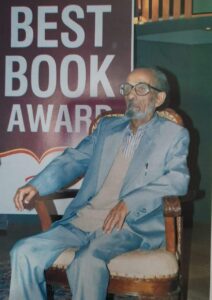
The anthology included poems by Kashmiri poets Amin Kamil, Rehman Rahi, and
Rafiq Raaz. Muneebur Rahman says ‘It’s for the first time that Kashmiri poets are
featured in an international anthology,” said Muneeb to a local English daily. “The
anthology includes poems from about 60 nationalities, wildly divergent cultures
and voices.” Translations of Amin Kamil’s Ghazals, Dew, and Water which
appeared in the anthology were also part of an international workshop held in
Chicago, sponsored by the University of Chicago. Poet and editor Ravi Shankar of
Central Connecticut State University also conducted a discussion of works by
Korean poet Ko Un, Chinese poet Bei Dao, Japanese poet Tada Chimako, and
Kashmiri poet Amin Kamil among four other poets from the Middle East.
Kamil has won awards from the Jammu & Kashmir Cultural Academy, the State
Government of Jammu & Kashmir, Robes of Honor from many prestigious
organisations, Sahitya Akademi Award (1967) International Irfan Foundation
Award, Kashmir University's Lifetime Achievement Award, and Padma Shri in the
year 2005 (Literature & Education) . Jammu & Kashmir Academy of Art, Culture
and Languages published a special issue of its literary magazine Sheeraza on Amin
Kamil's life and works which was released in Srinagar in Summer 2011.
“A writer exists on three planes—the plane of relationships, the plane of social ties,
and the plane of individuality, and he or she can’t do away with any of these”.
Kamil was quoted as saying by a local English daily 7 years back. And this is all
true about Kamil himself.
Poetry for Kamil is the art of giving meaning and
metaphoric value to words and situations. “I can say that literature is an indirect
art”, he had said. Kamil eas no doubt the poet, thinker, and reformer whose fearless
originality transformed the contours of Kashmiri verse and thought.
Author ,a former faculty at MERC Kashmir University is a free lance media professional, blogger and literary critic.
Email : showketshafi@gmail.com