Echoes of a Vanishing Childhood
Aamina Lateef (JKAS)
There is a quiet, unspoken nostalgia that lives in the hearts of those born in the 1990s — a nostalgia only our generation truly understands. We grew up in a world untouched by smartphones, social media, and the constant digital hum that defines today. Our mornings didn’t begin with glowing screens but with our parents’ firm, familiar voices: “Utho, school ka time ho gaya!” At times, they would even warn us, “10 baj gaye!” — when in reality, the clock showed only seven. Yet we believed them, because trust was simpler.
Life moved at a slower, softer rhythm. School ran from 10 AM to 4 PM. Evenings belonged to the playfields — not gyms, not screens, not Instagram reels. Friendships were formed through breathless running, scraped knees, homemade games, and laughter that echoed until dusk.
Aur phir sham dhale tak ghar wapas aana.
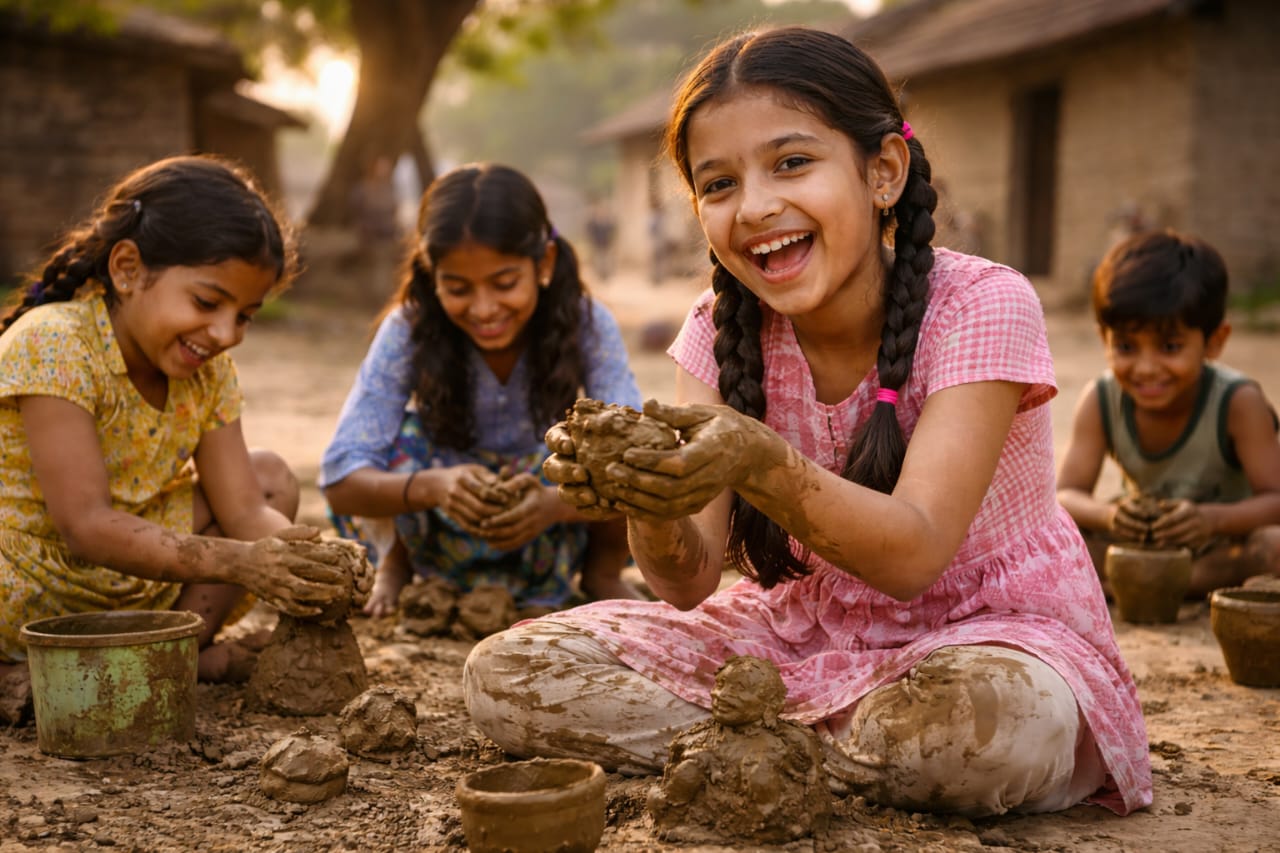
Sundays were miniature festivals. We made mud utensils, arranged gudda–guddi ki shaadi, and played xeero — a Kashmiri tradition where each friend brought one small item, and together we cooked in the fields on an open fire. The food was half-cooked, the recipes made no sense, yet those meals tasted better than anything gourmet today. They tasted like freedom, imagination, and a childhood lived outdoors.
And oh, Eid. No celebration felt as magical. We would wait for it the entire year, with a kind of shiddat today’s generation cannot understand. We spent months looking at toys in shops, deciding with great seriousness: “Iss Eid pe apni eidi se yahi khilona khareedenge.” What thoughtful, patient, disciplined little human beings we were. We knew the value of waiting, of earning, of longing.
Today’s children swipe and own.
We dreamed and saved.
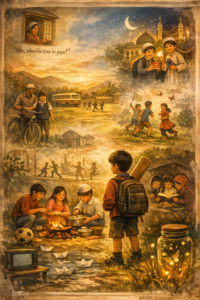
We are the generation that lived two lives — one in the open air, one in the digital cloud. We transitioned smoothly from an offline childhood to an online adulthood, from chalkboards to touchscreens, and from street games to virtual worlds. We adapted quickly, learned faster, and now navigate a world where social media shapes moods, trends, and even identities. Yet, deep down, we carry the soft-hearted innocence of a time when life was lived — not broadcast.
We were raised by a world where imagination was our entertainment. We lived in dreams — big, wild, fearless dreams. We imagined perfect futures, happy ever-afters, and lives shaped by love, honesty, and struggle. We chased those dreams with sincerity. We loved the hardships that came our way because we believed they built character. We earned our education, our careers, our status — step by slow step.
Inside each of us today live two souls:
One is tired — satisfied with what we’ve achieved, wanting rest, stability, and a comfortable life.
The other is restless — forever chasing challenges, because the stability we once longed for now feels unfamiliar, almost frightening. We have lived through so many transitions that silence unsettles us. Our bodies and minds don’t know how to fully rest; we’re always doing something, building something, thinking something. Stillness feels like a luxury, but also like a stranger.
We were close to nature in a way modern generations may never understand. We spent afternoons with neighborhood friends, wandered through fields in the evenings, and had conversations beneath open skies. We visited our relatives, sat with parents, ran to friends’ houses without appointments or texts. Time felt endless because phones didn’t interrupt every moment. Today, a simple “hal-chal” is sent over the phone — no visits, no warmth, no shared smiles over cups of tea. The new generation doesn’t even know many of their own relatives.
They no longer make paper boats in the rain, nor do they read books or whisper to the moon. Chasing fireflies and butterflies was once a sacred part of childhood — a magic now quietly slipping away. Perhaps they don’t even notice when it rains anymore; their entire sky has shrunk into the small glow of their screens.
We, the ’90s kids, grew up in real neighborhoods, where doors weren’t locked and hearts weren’t guarded. We learned empathy by living in communities, not comment sections. We learned patience by waiting in queues, by saving money, by dreaming through the year for that one Eid toy. We learned resilience by falling, rising, losing, and trying again — not by hitting “restart.”
We are gentle, emotional, empathetic — and proud of it. We carry within us the softness of an era that was simpler, kinder, slower. We are digital citizens today, yes, but we are shaped by an analogue heart. We scroll, post, and adapt with ease, yet a part of us remains rooted in a world where mornings smelled of home, where friendships were lived in person, where love was unfiltered, and where joy came wrapped in small, imperfect moments.
The 1990s didn’t just raise a generation — they raised a feeling.
A feeling that still whispers inside us, reminding us who we were, who we became, and of the quiet childhood that made us human in a world slowly forgetting how to be.
Aamina Lateef is a 2019-batch KAS officer and is currently serving as Block Development Officer (Headquarters), Kupwara, in the Department of Rural Development and Panchayati Raj (RDD&PR).
Email:Aaminabhatt567@gmailcom