Employment in Jammu and Kashmir: Where We Stand and Where We Can Go
Afiyah Javaid (JKAS)
Many people call Jammu and Kashmir paradise on earth, and for decades it has drawn millions of visitors to its lakes, orchards and mountain meadows. It remains one of North India’s most visited tourist destinations. The Valley carries a cultural inheritance of its own, with centuries-old crafts and Sufi roots that have shaped everyday life.
Over the last decade the region has made strides in several sectors. Private investment of Rs 14,948 crore has arrived since 2022-23, and over 9.4 lakh MSMEs are registered on the Udyam portal. Mission YUVA has added institutional support for first-time entrepreneurs.
Even so, the youth of J&K have yet to see employment opportunities at the level available in much of the rest of the country. Unemployment stood at 6.7% in 2024-25 against 3.5% nationally, and the gap is wider for young people in cities and for women. This is a qualified and motivated population, and the task ahead is to widen its options. This article reviews where employment stands today and proposes directions for taking it further.
Employment in J&K Today
On February 9, 2026, the Deputy Chief Minister informed the Legislative Assembly that J&K’s unemployment rate has stayed above the national average for six years. This points to a gap between the number of job seekers and the openings available, and policy can address that gap.
Registration data adds detail. About 3.70 lakh unemployed youth were registered on the government employment portal as of January 2025, including 1.13 lakh graduates and postgraduates. Registration is voluntary, and economists note that the figures mostly reflect educated youth seeking government posts, so they may not capture every job seeker. A baseline survey under Mission YUVA found that 4.73 lakh of 64.8 lakh people aged 18 to 50 described themselves as not working but willing to work.
Younger job seekers and women show the widest gaps. The Periodic Labour Force Survey (PLFS) recorded urban youth unemployment of 32% among those aged 15 to 29 in the July-September 2024 quarter, and the same release put J&K’s female unemployment rate at 53.6%, the highest among the states and union territories covered. Graduates make up about 13% of the J&K workforce according to PLFS 2023-24, and experts link this to a shortage of jobs that match educational qualifications.
Classrooms and Careers in J&K
Education and employment move together in J&K. Among graduates and postgraduates registered as unemployed in early 2024, more than 31% held advanced degrees, which shows how much the young population has invested in learning. Some education indicators leave room for improvement. The secondary dropout rate stands at 25.33%, and schools recorded fewer than 150 academic days in 2024-25 against a mandated 220.
Recruitment has had its own pauses. No government vacancies were advertised between 2017 and 2020, so applicants from those years now compete with later cohorts for the same posts. Select recruitment examinations have also been cancelled in recent years, which set back aspirants who had prepared for them.
Momentum Across the Union Territory
- Industry and investment. The J&K Industrial Policy 2021-30 aims to generate 4.5 lakh jobs over its ten-year period. Since 2022-23, 1,452 industrial units have been set up, with employment for 64,515 people. The Lieutenant Governor has said that proposals worth nearly Rs 60,000 crore are pending, that local private companies took part in a job fair, and that the JSW Group is bringing a BPO to Jammu.
Mission YUVA. The Yuva Udyami Vikas Abhiyan has placed self-employment at the centre of policy. Its baseline survey identified 5.5 lakh potential entrepreneurs, and the mission offers two innovation hubs and 14 incubation centres, with funding of up to Rs 20 lakh for innovative projects. Disbursements reached around Rs 1,750 crore in just over a year. J&K Bank alone has sanctioned more than 28,400 cases involving assistance above Rs 1,300 crore.
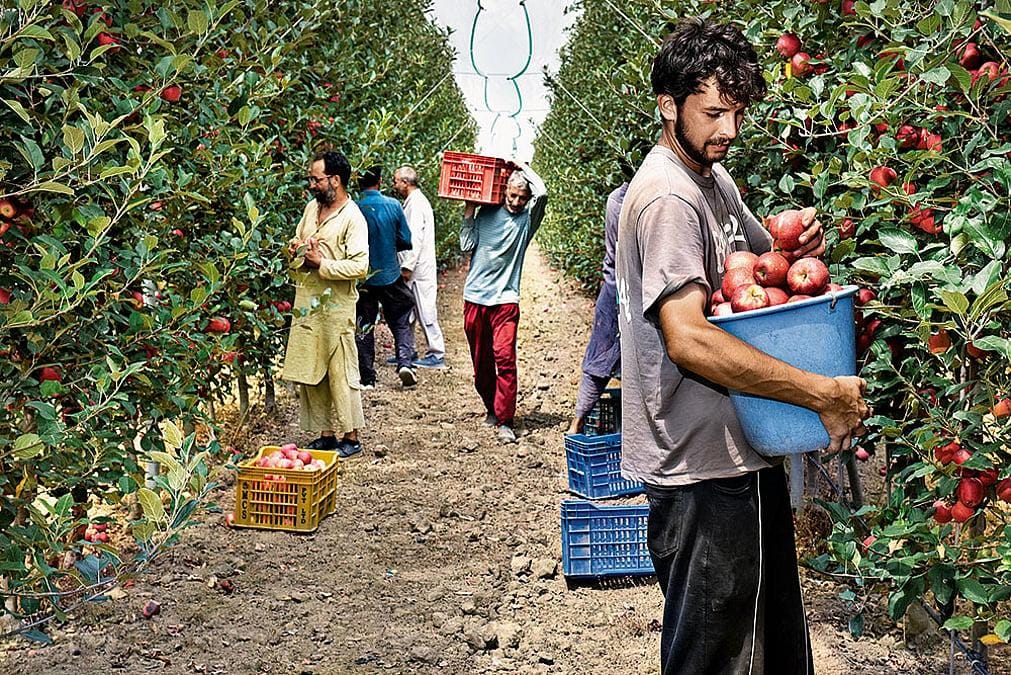
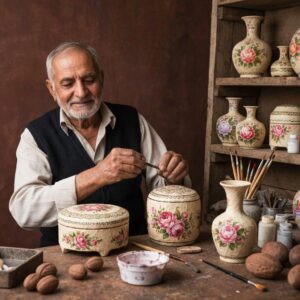
Orchards, looms and workshops. Agriculture and horticulture are the main sources of employment, with handicrafts, sericulture and animal husbandry as secondary occupations for many families, and about 43,000 weavers and 3.5 lakh artisans are linked to handlooms and handicrafts. J&K produces more than 91% of India’s almonds, and the GST reduction from 12% to 5% on handicrafts, agriculture and tourism is expected to lower costs and widen markets.
Tourism-linked enterprise. Self-employment support includes a Tourist Village Development Programme. Tourism already brings steady footfall to the Valley, and enterprises tied to it have a customer base close to home.
Charting the Course for Jammu and Kashmir
Self-Employment as a First Choice for J&K’s Graduates
Self-employment already dominates the structure of employment in J&K. The next step is to present it to graduates as a first career option. Loans reach further when paired with mentoring, market linkages, digital sales support and help with Udyam registration. A district-level network of experienced local entrepreneurs who coach newcomers through their first two years would add practical knowledge that credit alone cannot supply.
Nurturing a Culture of Enterprise
Entrepreneurial energy grows when young people see their peers succeed. Colleges and universities can bring incubation-centre outreach onto campus, introduce enterprise projects into degree programmes and invite local founders to teach. Annual district-level recognition for young enterprises, along with success stories told in local languages, would help families see enterprise as a respected career.
Tourism, Crafts and Heritage as Enterprise
Visitors come to the Valley for its scenery and its culture, and young entrepreneurs can serve both interests. Homestays, guided craft and food trails, heritage walks and online sales of GI-tagged products are four areas where small teams can start with modest capital. Training in hospitality, photography and digital marketing would help young people in villages take part directly.
Looking Beyond J&K’s Borders
Many young people in J&K prefer to work close to home, which is natural. The habit of staying within the UT keeps the job search inside the limited openings available here, and the hesitation to move away is often a mental hurdle before it is a practical one. A period of work in another Indian city brings wider professional networks, exposure to larger employers, new skills and savings that can later seed a business at home.
The Himayat programme offers a working model. It provides placement-linked skill training for unemployed youth in J&K, with a target of placing at least 70% of those trained, and it has signed agreements with companies for placements. At one Himayat job fair, 114 of 299 trained candidates were selected for openings across the country, and officials encouraged them to take up placements away from home so that other youth would follow. Hostel support in destination cities and alumni networks of J&K professionals would ease the first move.
Beyond Government Service
Public employment will always matter, and it cannot absorb every graduate on its own. The government has made the same point, saying that joblessness among educated youth cannot be addressed by the public sector alone and needs growth in private and other job-generating sectors. One commentary cited about 5.5 lakh applicants for roughly 4,000 vacancies. Tourism, horticulture-based food processing, handicraft exports and IT-enabled services all have room to grow. Career counselling in colleges can present these options early, and regular job fairs with local employers help graduates compare private offers with government posts.
Skills Matched to Market Needs
Short certifications, internships and industry-linked projects can be built into degree programmes so that graduates arrive with experience employers recognise. English communication and digital skills help in both employment and self-employment. Stronger foundations in school, through more instructional days and lower dropout rates, would widen the pool that reaches these programmes.
The Women of J&K in the Workforce
Higher participation by women is among the clearest opportunities in the labour market. Mission YUVA gives special focus to first-generation entrepreneurs, women and youth from remote areas, and the UT has established 20 hubs that inform women about the schemes open to them. Self-help groups in handicrafts and food processing, supported with training and market access, can bring more women into earning roles close to home.
Institutions J&K’s Youth Can Rely On
Predictable, time-bound recruitment helps aspirants plan their preparation. An annual recruitment calendar published at the start of each year, transparent examination processes and quick resolution of disputes would sustain confidence. Educational institutions would benefit from timely filling of faculty posts and regular reviews of graduate placement outcomes. A public dashboard on enterprise survival and job creation under Mission YUVA would show policymakers which supports work best.
A Future Built at Home in J&K
J&K enters this phase with credit reaching young entrepreneurs, investment proposals in the pipeline, crafts with a strong export record and a young workforce ready to learn. The visitors who have long come to the Valley also form a ready market for its products and services, which gives local enterprises a customer base at their doorstep. With self-employment, private enterprise, skills and mobility moving together, the region’s youth can work toward closing the gap with the national average and take a fuller part in the economy their home has long shown the world.