Civic Sense Begins with Us: Why Kashmir’s Youth Must Lead the Change
Ishrat Kashafi
A few days ago, while travelling on public transport from Handwara to Kupwara, I witnessed something that stayed with me. Two young women sitting in front of me got off briefly at Kupwara’s Makai Point to buy roasted corn. After enjoying their roasted corn, they casually threw the corn husks and the plastic wrapper onto the roadside-not once, but three times. I remained silent at first, hoping they would realise what they were doing. When it happened again, I politely said, “Please don’t throw garbage on the road.” One of the women looked at me and, with a hint of sarcasm, said, “Why? Is the road mopped?” I smiled and replied, Yes, it is. Someone cleans these roads every day but they shouldn’t have to clean up after us.
That brief exchange lasted only a few seconds, yet it revealed a mindset that quietly erodes the beauty of our homeland. Roads are cleaned by sanitation workers, but they are not meant to become our dustbins. Civic sense begins where convenience ends.
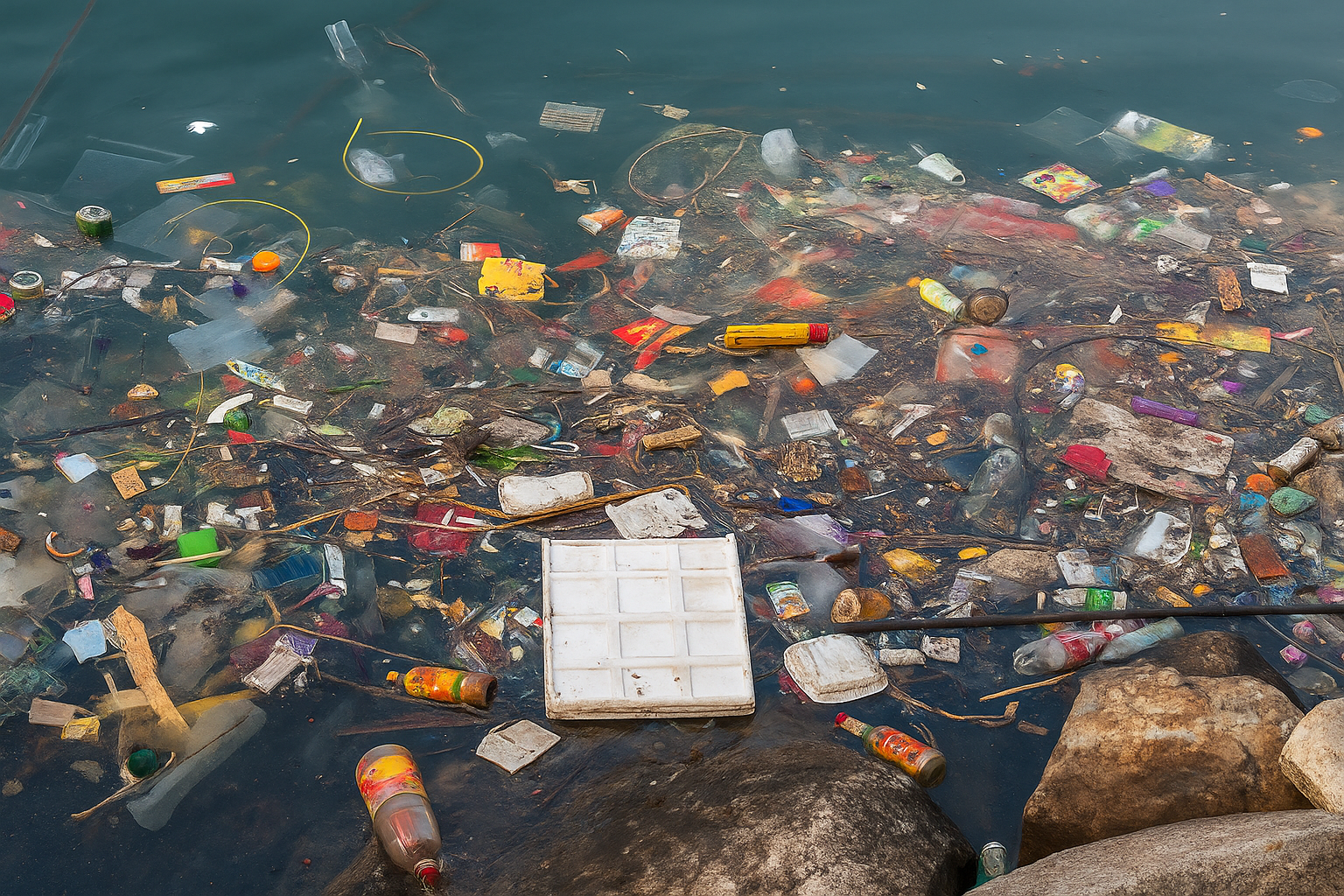
Kashmir has long been celebrated for its snow-capped mountains, crystal-clear streams, lush meadows and rich cultural heritage. It is often described as paradise on earth, attracting visitors from across the globe. But preserving paradise requires more than admiration;it requires responsibility. Every wrapper thrown onto a road, every plastic bottle tossed into a stream, and every household that treats nature as a dumping ground chips away at the very beauty we proudly celebrate.
Unfortunately, the consequences of neglect are becoming increasingly visible across Kupwara district. Every morning, hundreds of residents step out for a walk in search of fresh air and a healthier start to the day. Yet, instead of breathing the crisp mountain air that Kashmir is known for, many are greeted by the acrid smell of burning plastic and mixed waste. The irony is striking: people set out to improve their health only to inhale toxic smoke from garbage fires.
Sadly, this mindset is not confined to a single roadside incident. It is reflected in many corners of our district, where littering and careless waste disposal have gradually become normalised.
By evening, the scene shifts to Kupwara Bus Stand, the district’s busiest public space. As the first impression many visitors have of the town, it is often littered with plastic bottles, disposable cups, food wrappers and other waste left behind by commuters and vendors.
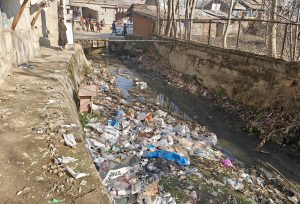
At the heart of Kupwara town flows the Regipora -Usmanabad Nallah, a natural stream that should be one of the town’s greatest assets. Instead, sections of it have become a dumping ground, with plastic bags, household waste and other domestic refuse frequently finding their way into its waters.
What makes this particularly heartbreaking is the nallah’s untapped potential. With thoughtful planning, community participation and collective responsibility, the Regipora–Usmanabad Nallah could be transformed into a beautiful riverfront where families gather, children play, morning walkers stroll, and visitors experience the charm of Kupwara. Instead, neglect and indiscriminate dumping have robbed it of that possibility.
The problem extends well beyond the heart of Kupwara. Drive towards Karihama, Hyhama, Lolab, Trehgam or Kralpora, and the pattern is difficult to ignore. At numerous locations, roadsides have quietly evolved into dumping sites where plastic waste, household garbage and other refuse accumulate day after day. These roads pass through landscapes renowned for their beauty, yet the litter scattered along them tells a different story-one not of poverty, but of indifference.
These are only a few examples from one district. Imagine, then, the cumulative impact across the entire Union Territory if similar practices continue unchecked.
The numbers paint a worrying picture. Jammu and Kashmir generates approximately 1,500 tonnes of municipal solid waste every day, yet only a small fraction is scientifically processed. The remaining waste often finds its way into open dumping sites, roadsides, water bodies and unmanaged landfills, placing enormous pressure on our fragile Himalayan ecosystem. Studies also indicate that municipal waste generation has increased significantly in recent years, with food waste accounting for nearly 60 percent of the total waste stream, while plastic waste continues to rise at an alarming pace.
The consequences are already impossible to ignore. Every summer, residents of Srinagar and adjoining areas experience the foul odour drifting from the Achan landfill, a reminder that garbage does not disappear once it leaves our homes. It simply accumulates elsewhere’polluting the air we breathe, contaminating our water sources and degrading the environment that sustains us.
Yet this story does not have to end this way.
India itself has shown that transformation is possible. Indore, once grappling with waste management challenges, has emerged as the country’s cleanest city by consistently topping the Swachh Survekshan rankings. Through strict waste segregation at source, efficient door-to-door collection, scientific waste processing and active citizen participation, Indore has become a model for urban cleanliness. More broadly, Madhya Pradesh and Gujarat have emerged among India’s leading performers in waste management and recycling, demonstrating that lasting change is achieved not merely through government initiatives but through citizens who take ownership of their surroundings.
The world offers an even stronger example. Sweden recovers almost 99 per cent of its household waste through recycling, composting and waste-to-energy systems, leaving less than 1 per cent to end up in landfills. There, waste is viewed not as a nuisance but as a resource capable of producing energy, reducing pollution and creating economic value. Sweden’s success did not begin with advanced technology alone. It began with a culture in which citizens recognised that protecting public spaces was everyone’s responsibility.
Kashmir does not need to become another Sweden overnight, nor another Indore in a single year. If Indore can transform itself, if Madhya Pradesh and Gujarat can lead the country in waste management, and if Sweden can recover nearly all of its household waste, then one question naturally follows:
Why not Kashmir?
The answer lies not only in government policies or infrastructure but in each one of us.
The youth of Kashmir have repeatedly demonstrated resilience, compassion and leadership. They volunteer during emergencies, organise blood donation drives, plant trees, educate children and support community initiatives. The same energy can reshape our environmental future. Carry your litter until you find a dustbin. Segregate waste at home. Reduce single-use plastics. Participate in local clean-up drives. Speak up when someone litters-not with anger, but with respect. Civic sense spreads when people choose to lead by example.
Schools, colleges and universities must also play a greater role by encouraging environmental education, community service and civic engagement. Social media, too, can become a powerful force for change by celebrating responsible citizens, highlighting local success stories and inspiring others to act.
The future of Kashmir will not be determined solely by highways, tunnels or development projects. It will also be determined by whether our rivers flow clean, our roads remain litter-free and our children inherit landscapes that inspire pride rather than regret.
The incident I witnessed on my journey from Handwara to Kupwara was not really about two corn husks. It was about a choice-the choice between indifference and responsibility. Every wrapper thrown from a moving vehicle, every plastic bag tossed into a stream and every household that treats a nallah as a dumping site pushes us further away from the Kashmir we dream of.
The youth of Kashmir are not merely the leaders of tomorrow-they are the custodians of today. If we truly love this land, our love must be visible not only in our words but also in our actions. After all, the cleanest societies are not those with the greatest number of sweepers; they are those with the fewest people willing to litter.
The next time we are tempted to throw a wrapper from a vehicle or toss a plastic bag into a stream, let us remember that Kashmir’s beauty is not protected by mountains alone. It is protected by the choices we make every single day.
If not us, then who will protect Kashmir?
The author is an MBA and M.Sc. in Zoology, a writer, blogger and educator with experience in management and teaching. She can be reached at kashafiishrat10@gmail.com